FREQUENTLY ASKED QUESTIONS

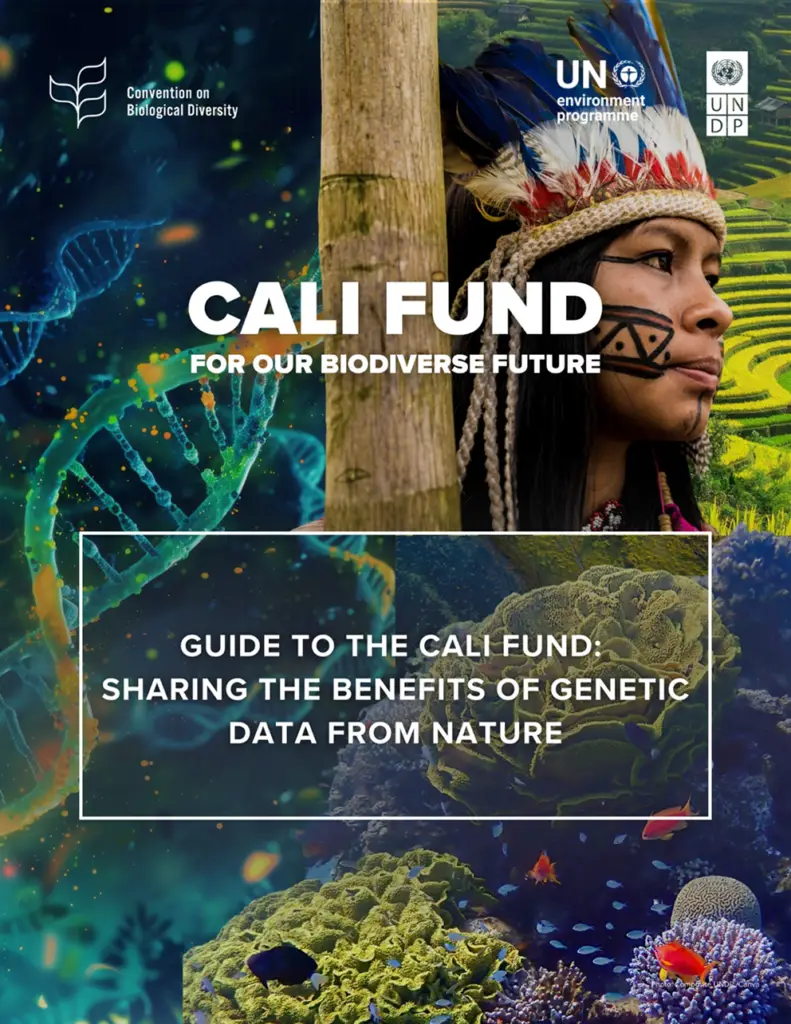
The Cali Fund is a global financing mechanism established under the Convention on Biological Diversity to ensure the fair and equitable sharing of benefits derived from the use of Digital Sequence Information (DSI) on genetic resources. It enables companies that benefit from this data to contribute financially to biodiversity conservation and its sustainable use worldwide.

Contributions to the Fund support biodiversity protection, strengthen scientific capacity, and provide direct funding to developing countries and indigenous peoples and local communities who play a key role in conserving ecosystems. The Fund also helps maintain open and accessible genetic data while promoting a fair and transparent global benefit-sharing system.

The Cali Fund applies to DSI that meets all the following criteria:

- It has been made publicly available;
- It is not subject to mutually agreed terms, unless those terms explicitly allow public sharing;
- It is not already governed by another international agreement on access and benefit-sharing, unless that agreement opts to use this mechanism.

By focusing on publicly available digital sequence information not otherwise regulated, the mechanism offers legal and operational clarity for companies using digital sequence information in research, development, and commercial products

The Multilateral Mechanism for the Fair and Equitable Sharing of Benefits from the use of DSI was established by 196 governments.

Agreed at COP15 in 2022 and operationalized at COP16 in 2025, the mechanism provides a predictable and internationally agreed framework for sharing both monetary and non-monetary benefits, while preserving open access to genetic data for research and innovation.

Contributions can be made through monetary payment directly to the United Nations Multi-Partner Trust Fund Office (UN MPTFO), the host of the Fund.

Users of DSI in sectors that benefit from its use in their commercial activities should contribute a proportion of their profits or revenue to the global fund, according to their size. These rates are currently 1% of annual profits or 0.1% of annual revenue. See here for the contribution forms and how to contact the MPTFO: The Cali Fund

To ensure proportionality, only large entities—as defined under clear financial thresholds—are expected to contribute. An entity is considered "large" if it meets two out of the following three criteria, averaged over the past three years:

- Total assets of at least USD 20 million
- Annual sales/revenue of at least USD 50 million
- Annual profit of at least USD 5 million

This ensures that contributions come from companies with the capacity to pay, and that smaller players, including start-ups and research-based innovators, are not unduly burdened

Entities and institutions that are not commercially profiting from Digital Sequence Information are currently exempt from making financial contributions.

These include:
- Public databases
- Academic institutions
- Public research organizations.

The mechanism is designed to support open science while ensuring that commercial beneficiaries contribute to the future conservation and sustainable use of the biodiversity from which they benefit.

Download the Cali Fund Guide

Learn more about benefit-sharing through the multilateral mechanism. It provides an introduction and overview of the basics of the multilateral mechanism and the Cali Fund (The Private Sector guide is available in all UN languages).